
By Maria Stepanyan, Founder and CEO
At the end of last year, we had the opportunity to present the Healthy Heroes Challenge to the St. Mary’s Armenian Apostolic Church community, an important step forward in sharing our mission.
As an active member of the St. Mary’s community, I was honored to introduce One Thriving World and our first global health initiative, the Healthy Heroes Challenge. Together with my co-presenter, Aurmin Amirmokri, we shared not only what this program is, but why it exists and why it matters for Armenia’s future.
How a Personal Experience Sparked a Global Health Initiative
To understand the Healthy Heroes Challenge, it helps to start with how the idea began.
Like many Armenian-Americans, I grew up familiar with nutrition tools such as the food pyramid or MyPlate, visual guides meant to show how a balanced diet should look. But years ago, during a summer trip to Armenia, I experienced firsthand how different real-life eating patterns can be from those ideal models.
For over a month, nearly every meal consisted of bread, rice, potatoes, or pasta paired with meat, often fried or heavily salted. Vegetables were rare, fruit was occasional, and sweets were everywhere, including pastries, cakes, and sugary drinks woven into daily life. While the food was delicious and closely tied to culture and family, it became clear that balance was missing.
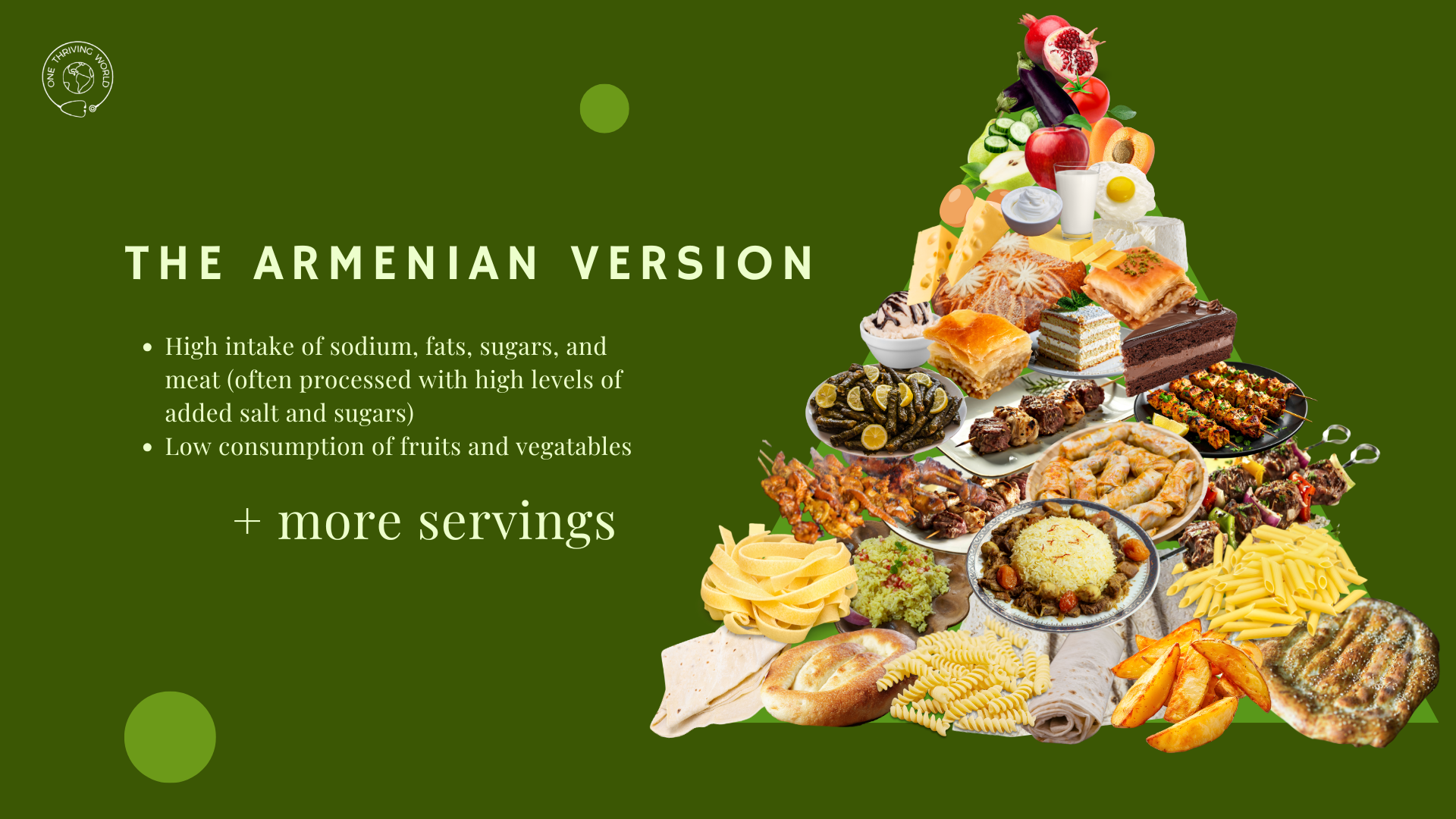
A slide from our presentation showing how everyday eating patterns in Armenia may differ from the traditional food pyramid.
After reflecting on that experience and speaking with relatives and friends in Armenia over the years, I began to wonder: what does this mean for long-term health?
When Personal Experience Meets Public Health Data
To answer that question, Aurmin, our experienced epidemiologist, presented data that aligned with what many public health experts in Armenia have been raising concerns about for years.
Armenia faces some of the highest rates of premature death due to non-communicable diseases (NCDs) in Europe. These diseases, including cardiovascular disease, diabetes, cancer, obesity, and chronic respiratory conditions, are not contagious, but they are closely connected to everyday habits such as diet, physical activity, smoking, and alcohol use.
Key contributors include:
Excessive sodium intake from salted and pickled foods
Heavy reliance on refined carbohydrates from bread-centric meals
High smoking rates, particularly among men
Widespread alcohol consumption embedded in social culture
According to Armenia’s Ministry of Health, 85 to 90 percent of premature deaths in the country are linked to non-communicable diseases. These conditions develop slowly, often going unnoticed for years, until they lead to serious and sometimes fatal outcomes.
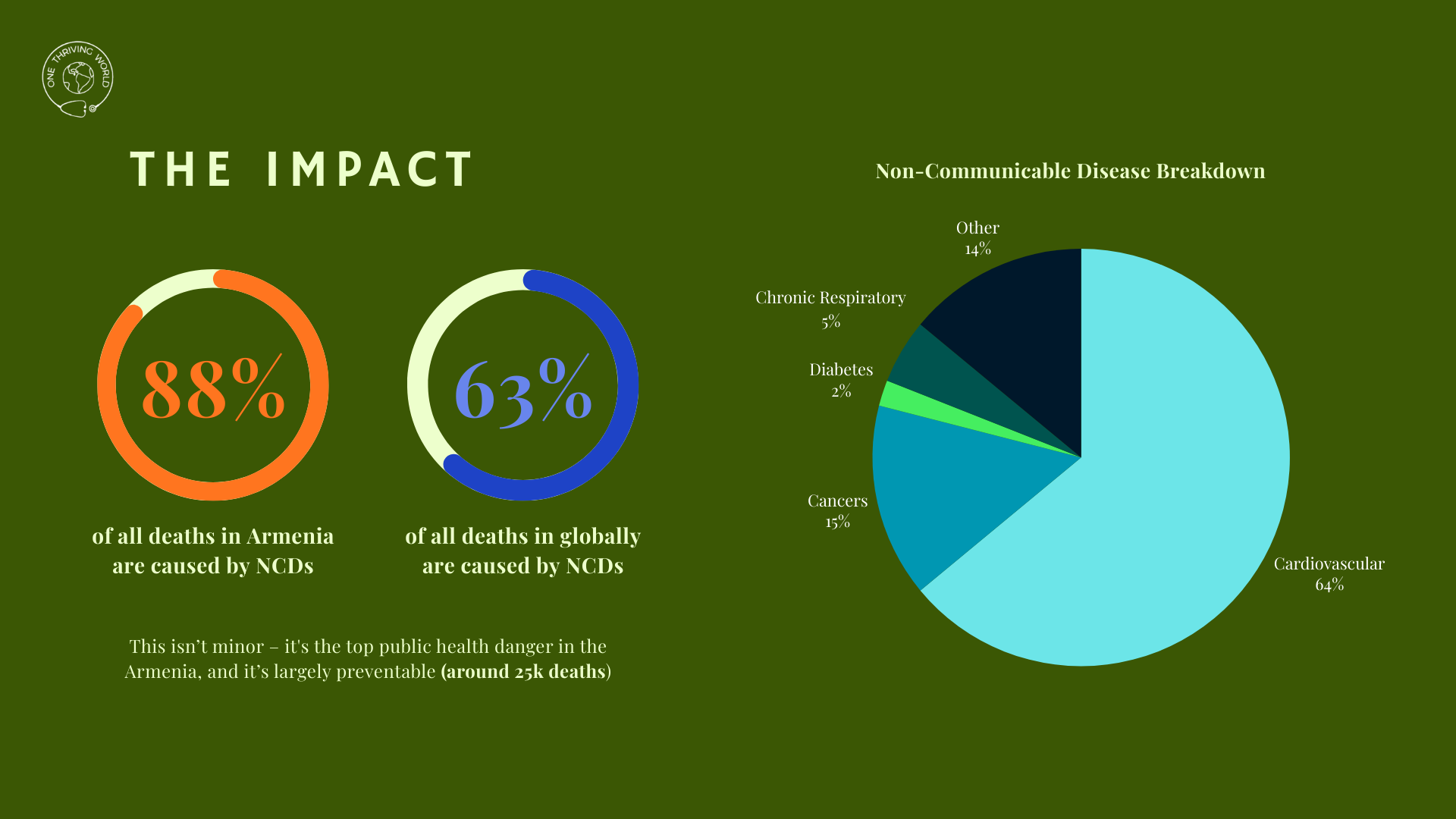
A slide from our presentation highlighting the scale of noncommunicable disease burden in Armenia through public health data.
Why Education and Why Youth Matter
Once the scale of the issue becomes clear, the question naturally follows: what can actually make a difference?
The answer, supported by both research and conversations with Armenian health experts, is early and effective education. Habits form young, especially during middle school years, when students begin making independent food choices for the first time.
Guided by discussions with Armenian public health professionals, youth, nonprofit leaders, and the Ministry of Health, One Thriving World partnered with the School Feeding and Child Welfare Agency of Armenia to develop a targeted solution, the Healthy Heroes Challenge.
What Makes the Healthy Heroes Challenge Different
The Healthy Heroes Challenge is a nutrition and healthy lifestyle education program led by Armenian-American college and graduate students and designed specifically for Armenian middle school students. Every element of the program was intentionally built around what research shows actually works:
Active participation: No lectures and no textbooks. Students learn through games, competitions, and hands-on activities.
Consistent exposure: A week-long after-school program in the spring, followed by a five-day summer camp with the same students.
Cultural relevance: Curriculum developed with Armenian experts, using familiar foods, habits, and real-life scenarios.
Peer connection: Sessions led by Armenian-American youth who share language, culture, and lived experience.
Measurable impact: Tools like Kahoot are used to track knowledge growth and improve the program over time.
By reaching students at a critical age, just as lifelong habits are forming, the program aims to reduce preventable health risks and empower youth with practical skills they can use every day.
Gratitude and Looking Ahead
We are grateful to St. Mary’s Armenian Apostolic Church for providing the space to share this vision and connect with the community. Opportunities like this remind us that meaningful change begins with conversation, collaboration, and shared commitment.
As we prepare for our first Healthy Heroes Challenge sessions in Armenia this spring and summer, we are encouraged by the support we have received and committed to building a healthier future, one student, one choice, and one habit at a time.
If you are interested in supporting the program, we invite you to consider donating and joining us in creating lasting impact.
